This section supplements the “LIS-SV”
product manual. The parameters described here are only available if the LIS-SV
is used in an ABULiner control unit.
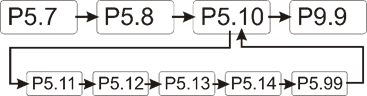
Overview of the
'ABULiner' parameter level
The following parameters can be set in the 'ABULiner'
parameter level of the LIS-SV.
|

|
Danger during setting work!
During setting work on the LIS-SV, monitoring of
the wire rope hoist is switched off. This means the wire rope hoist cannot
be monitored for excess load, among other things. This means the
wire rope hoist cannot be monitored for excess load, among other
things.
This in turn means the load could fall and kill or
injure people!
Do not use the crane for normal work during
setting work, and only lift loads very carefully for test
purposes! |
All LIS-SV parameters which are important for the ABULiner
are combined in a separate parameter level, which is shown as a submenu.
 Move the load hook out of
the limit switch range (up or down).
Move the load hook out of
the limit switch range (up or down).
During parameter setting, the load hook must not be within the
limit switch range.
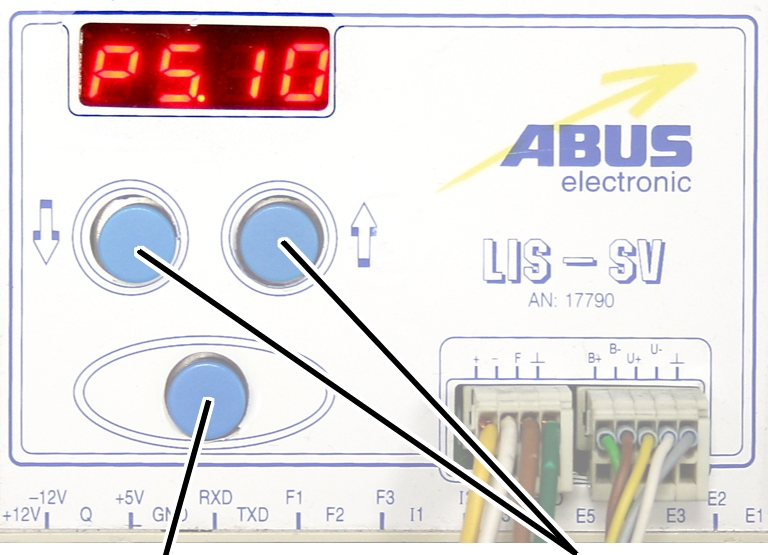
Open the menu of the
LIS-SV. See the documentation “Load indicator system LIS-SV”.
|
|
|
Enter
button |
Arrow
buttons |
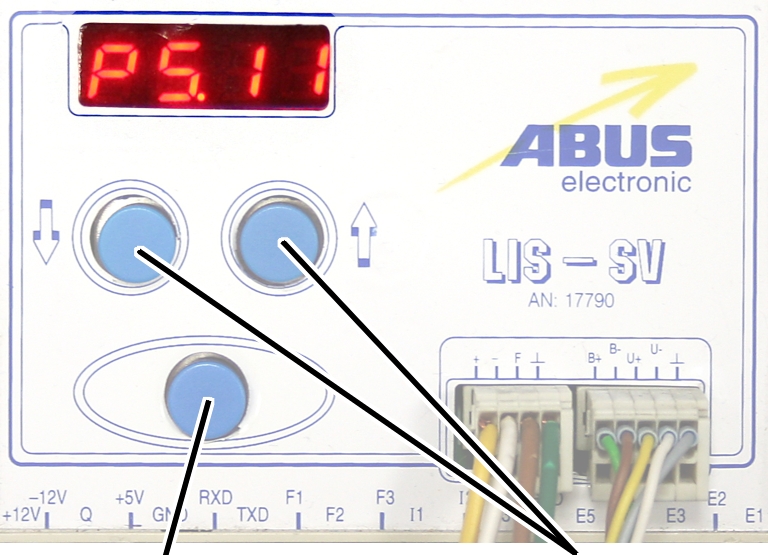
 Select parameter 5.10.
Press ENTER.
● The
'ABULiner' parameter level is activated.
● Parameter
5.11 is displayed.
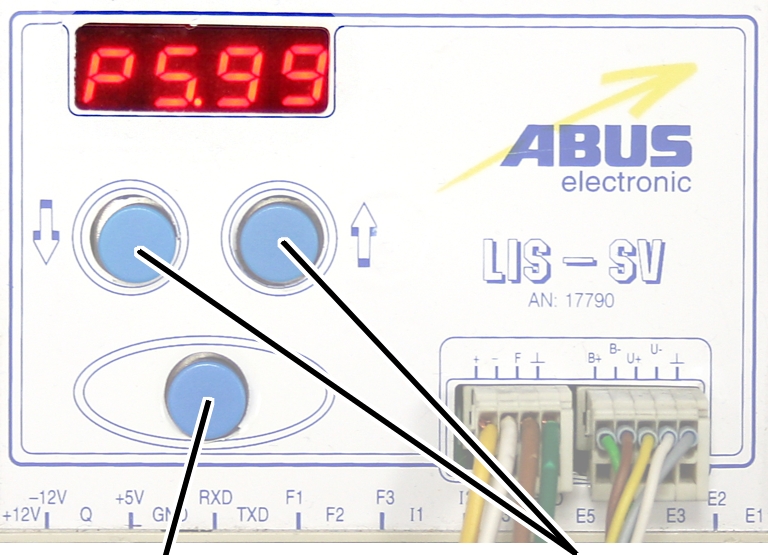
Exiting the
'ABULiner' parameter level
|
|
|
Enter
button |
Arrow
buttons |
Select parameter 5.99.
Press ENTER.
● The
previous parameter level is reactivated.
● Parameter
5.10 is displayed.
The LIS-SV is automatically activated for the ABULiner if a
value is entered for the parameter 5.11.
In the ABULiner mode (a value is set for parameter 5.11):
─ The
LIS-SV can monitor the total load for a maximum of two wire rope hoists.
─ Input F3
(normally used for measuring the load of wire rope hoist 3) now serves in
monitoring the current rotational frequency of the hoist motor.
─ A value
can be entered for parameter 3.0 (maximum load capacity of wire rope hoist 3).
If a value is entered for this, parameter 5.11 cannot be set.
─ This
interlocking thus excludes an incorrect setting.
─ The
load-controlled switching point at output TxD of the LIS-SV cannot be used.
─
Parameter 4.5 (setting for load-controlled switching point) is not available.
In the normal mode (no value is set for parameter 5.11):
─
Operation of the ABULiner Lifting/Lowering unit is not possible.
─ The
LIS-SV can monitor the total load for up to three wire rope hoists.
─ Input F3
serves in measuring the load of a third wire rope hoist.
─ A value
can be entered for parameter 5.11 (gear ratio). If a value is entered for this,
parameter 3.0 cannot be set.
─ This
interlocking thus excludes an incorrect setting.
─ The
load-controlled switching point at output TxD of the LIS-SV can be used.
─
Parameter 4.5 (setting for load-controlled switching point) can be used.
The LIS-SV uses the signal of the encoder and the gear ratio
of the hoisting gear to calculate the hook travel distance, the maximum distance
in the limit switch range and the current rotational frequency of the hoist
motor. The gear ratio must be set on the machine.
|
|
|
Cable
speed |
|
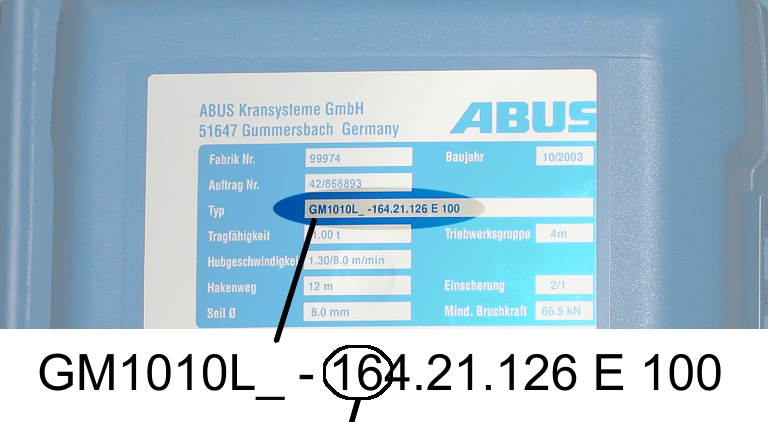
Read off the type
designation at the type plate of the wire rope hoist.
Read off the cable
speed.
From this table, select
the gear ratio that matches the cable speed.
|
|
Cable
speed |
|
Hoist motor GM |
32 m/min at 50 Hz
38 m/min at 60
Hz |
25 m/min at 50 Hz
30 m/min at 60
Hz |
20 m/min at 50 Hz
24 m/min at 60
Hz |
16 m/min at 50 Hz
19 m/min at 60
Hz |
|
800.4 |
50.01 |
63.49 |
77.77 |
98.16 |
|
800.5 |
47.03 |
60.04 |
74.66 |
95.03 |
|
1000.6 |
54.43 |
68.91 |
84.00 |
105.1 |
|
1000.7 |
54.60 |
68.06 |
81.45 |
104.6 |
|
2000.3 |
58.22 |
74.23 |
91.19 |
118.4 |
|
3000.4 |
73.61 |
93.92 |
118.4 |
152.9 |
|
5000.3 |
85.14 |
109.3 |
132.8 |
169.0 |
|
5000.4 |
80.20 |
104.9 |
127.7 |
160.6 |
|
6000.3 |
94.69 |
118.5 |
149.6 |
182.7 |
|
7000.1 |
118.0 |
148.3 |
182.6 |
232.0 |
|
|
|
|
|
|
Table: Gear ratios (numerical values) depending on
hoist motor (lines) and cable speeds (columns) at 50 and 60 Hz.
|
|
|
Enter
button |
Arrow
buttons |
Move the load hook out of
the limit switch range (up or down).
During parameter setting, the load hook must not be within the
limit switch range.
Select parameter 5.11.
Press ENTER.
● The set
value is displayed.
If the value is 0.00, the function is deactivated.
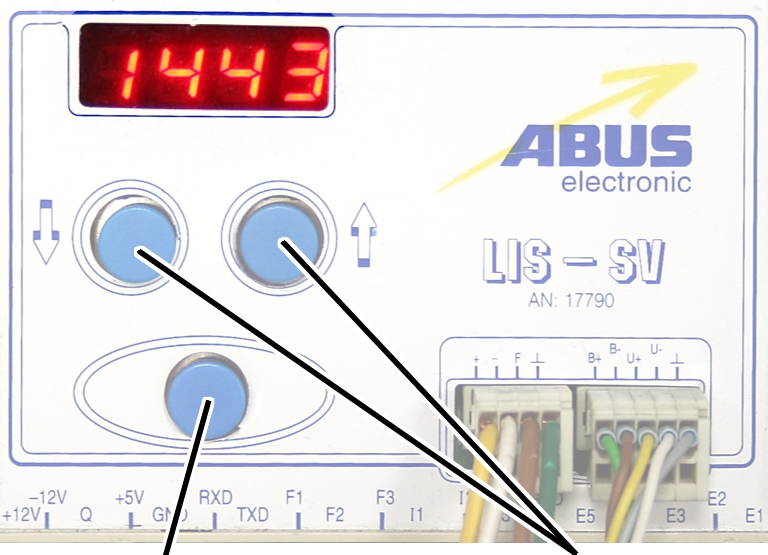
● Hold ENTER
pressed.
● CODE is
displayed.
Hold ENTER pressed.
|
|
|
Enter
button |
Arrow
buttons |
Enter the code 1443.
Press ENTER briefly.
|
|
|
Enter
button |
Arrow
buttons |
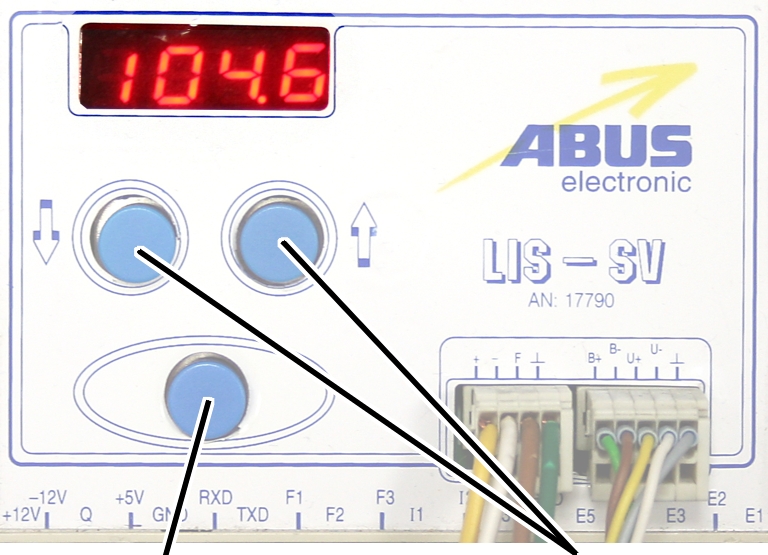
Set the value from the
table.
If the display ‘0.00’ cannot be changed, a value is set in
parameter 3.0. In this case, set the value to zero first.
Press ENTER briefly.
Cute Shemale Tgp Direct
Transgender individuals have profoundly influenced broader LGBTQ+ culture, which in turn has shaped global pop culture, language, and fashion.
The relationship between the transgender community and broader LGBTQ+ culture is a dynamic tapestry woven from shared struggles, distinct identities, and collective triumphs. While often grouped under a single acronym, the experiences of gender-nonconforming individuals and sexual minorities represent unique threads of human diversity. Understanding this intersection requires exploring historical roots, modern cultural contributions, unique challenges, and the ongoing fight for liberation. Historical Foundations and the Fight for Liberation
Originating in Harlem during the late 20th century, ballroom culture was created by Black and Latino trans and queer communities as a safe competitive space. It birthed "voguing," specific dance styles, and runway categories.
Before the late 1960s, cross-dressing laws in the United States and similar public decency laws globally criminalised the mere existence of transgender individuals. Gay bars and underground clubs became the few sanctuaries where gay, lesbian, and transgender people could congregate away from societal hostility.
For decades, bar raids and police harassment were a daily reality for queer and trans individuals. The turning point came in the late 1960s. At the Compton’s Cafeteria Riot in San Francisco (1966) and the Stonewall Riots in New York City (1969), transgender women of color, drag queens, and gender-nonconforming youth stood at the front lines. They fought back against state-sanctioned violence, transforming a underground community into a political movement. Key Pioneers cute shemale tgp
The evolution of LGBTQ+ culture is inseparable from the history and resilience of the transgender community. By honoring past pioneers, protecting vulnerable members, and celebrating authentic self-expression, the collective movement moves closer to a world where everyone can live safely and openly. To help tailor more specific content on this topic, please
The transgender community is not merely an addendum to LGBTQ+ culture; it is an foundational pillar. From the streets of Greenwich Village to modern legislative floors, the push for transgender rights has consistently expanded the boundaries of bodily autonomy and self-determination for everyone. By honoring the unique distinctions of trans identity while celebrating shared queer history, the broader culture moves closer to a future of true equity and acceptance.
The community has led the cultural shift toward respecting self-identification. Normalizing the sharing of pronouns (he/him, she/her, they/them, ze/hir) has fostered safer spaces both online and offline.
Despite increased visibility, the transgender community faces unique hurdles within and outside the LGBTQ umbrella. Issues such as , lack of access to gender-affirming healthcare, and disproportionate rates of violence against trans women of color remain urgent crises. Before the late 1960s, cross-dressing laws in the
The foundational catalyst for modern LGBTQ+ pride was a rebellion against a police raid at the Stonewall Inn in New York City. Key figures who led the resistance were trans women of color and drag queens, including Marsha P. Johnson and Sylvia Rivera. Their defiance shifted the movement from assimilationist pleas to radical demands for liberation.
For :
The transgender community currently faces a distinct set of systemic challenges that often require different legal and medical solutions than those of cisgender LGB individuals.
The underlying need is probably for accurate, nuanced content that highlights transgender experiences within the larger movement, addressing both solidarity and unique challenges. I can start with an engaging introduction that sets the scene—maybe contrasting historical visibility with current political climates. Then, I'll break it into logical sections: defining key terms, historical ties (Stonewall, trans pioneers), unique challenges like healthcare and violence, cultural contributions (arts, media), internal tensions (e.g., trans-exclusionary ideas), and intersectionality. The conclusion should tie back to the importance of unity and future directions. ban trans individuals from sports
By senior year, Lena was co-facilitating the Bloom group. She’d helped a closeted freshman find a gender-affirming therapist. She’d marched in her first Pride, sweat sticking her binder to her ribs, chanting “Trans rights are human rights” until her throat went raw. She’d watched a drag king perform “Rebel Rebel” and felt something ancient and joyful crack open in her chest.
A common point of confusion within mainstream commentary is the conflation of gender identity with sexual orientation.
“You don’t have to knock,” said Sam, who opened the door. They wore a patch-covered denim jacket and had a nose ring that caught the fluorescent light. “It’s not a secret speakeasy. Well,” they added with a grin, “kind of.”
The current political landscape features a high volume of targeted legislation. These bills often aim to restrict access to gender-affirming healthcare for youth and adults, ban trans individuals from sports, and restrict the discussion of gender identity in schools. Advocacy groups work continuously to challenge these laws in court. Systemic Inequality
Only for auxiliary fans
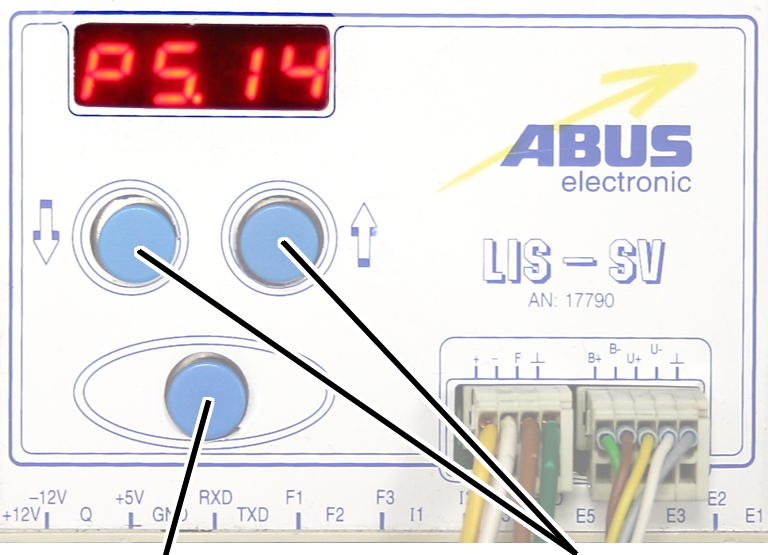
The auxiliary fan of the hoist motor continues to run for
several minutes after the lifting or lowering. This ensures that the hoist motor
is adequately cooled even at slow lifting speeds. The run-on time can be
adjusted.
|
|
|
Enter
button |
Arrow
buttons |
Move the load hook out of
the limit switch range (up or down).
During parameter setting, the load hook must not be within the
limit switch range.
Select parameter 5.14.
Press ENTER.
● The set
value is displayed.
|
|
|
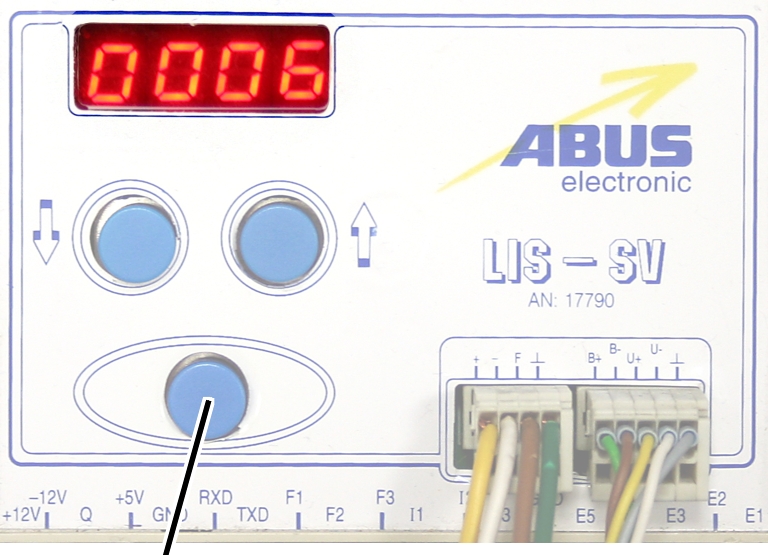
Enter
button |
|
Set the value to between 3
and 10 minutes using the arrow buttons.
Press ENTER.